French
 Arabic
 German
 Russian
 Dutch
 Portuguese
 Turkish
 Spanish
 Italian

Underground crews constantly battle dust and material rebound during ground support. The debate of wet mix vs dry mix shotcrete is not about one universally superior method. It is about which operational constraints a specific mine can tolerate. Choosing the wrong process leads to wasted materials, poor ventilation, and slow cycle times.
The dry mix process conveys materials pneumatically and adds water at the nozzle. This offers logistical flexibility and allows operators to adjust moisture on the fly in fractured rock. However, hydration is incomplete upon impact. This results in high rebound rates and severe silica dust, requiring heavy ventilation.
Wet mix shotcrete eliminates this uncertainty by pre-mixing water and aggregates. This ensures a homogeneous material, significantly lowering dust and rebound. The trade-off is a rigid chemical timeline. The concrete must be pumped with a retarder and receive a liquid accelerator precisely at the nozzle. If dosing lags the pump output, the material slumps.
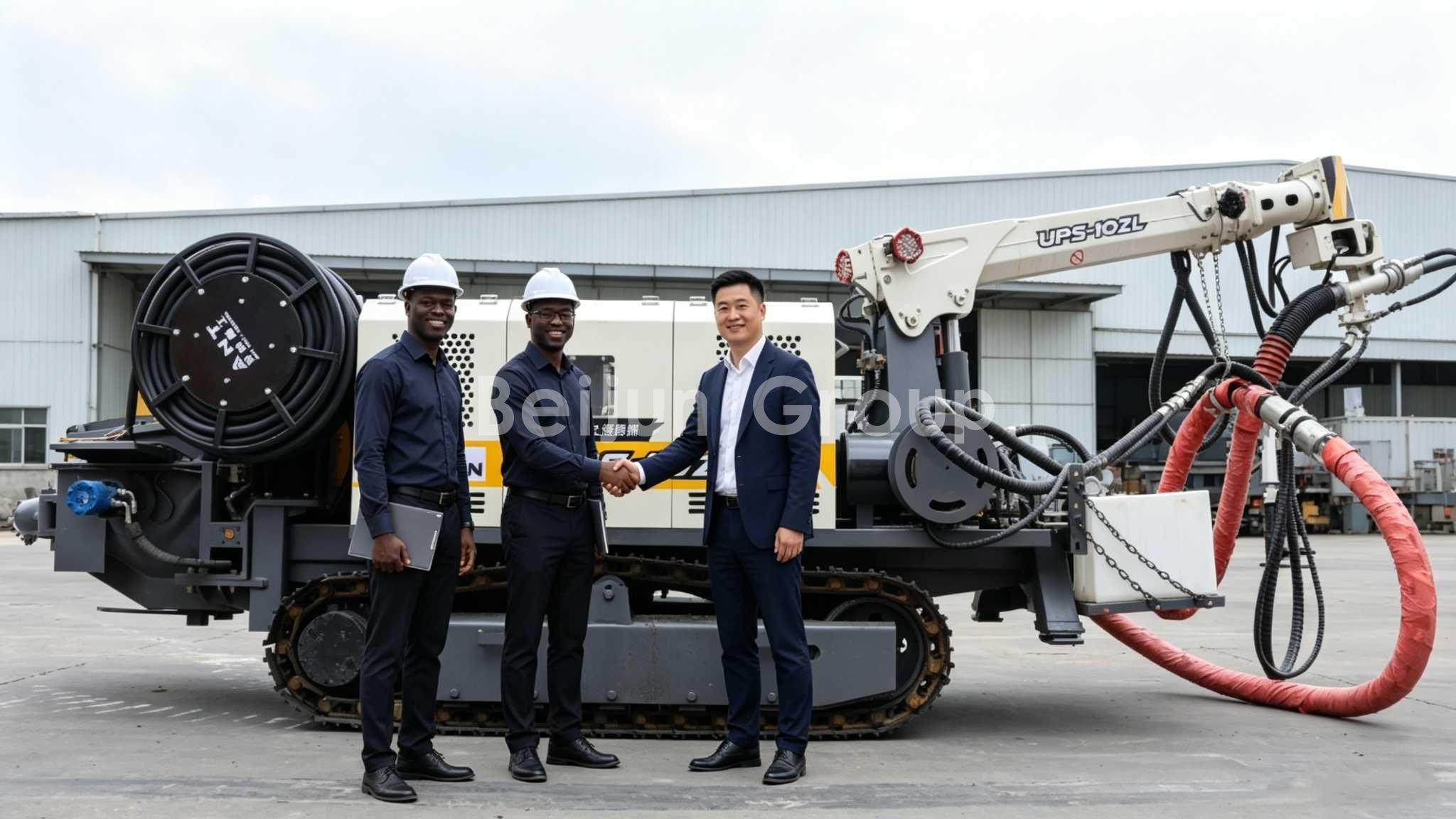
This demand for precision dictates equipment design. The Beijun UPS-10ZL Mining Concrete Spraying Vehicle handles aggregates up to 15 mm and delivers 12 m³/h at 7 MPa. To manage the chemical clock, it integrates a 300 L/h additive system for accurate dosing. Its compact 1500 mm width and 12-meter horizontal boom reach allow access to tight headings while keeping operators at a safe distance via wireless control.
Ultimately, dry mix remains viable for small repairs or remote areas lacking batching plants. But for large-scale headings where ventilation costs are high, wet systems are the standard. The decision hinges on infrastructure: without the technical support to maintain strict accelerator control, a wet system will cause more downtime than it solves.
Contact Beijun Group
Email: beijun@beijun-group.com
Phone: +86 17854788133
Website: www.beijun-group.com
Address: Beijun Industrial Park, Jining, Shandong, China