French
 Arabic
 German
 Russian
 Dutch
 Portuguese
 Turkish
 Spanish
 Italian
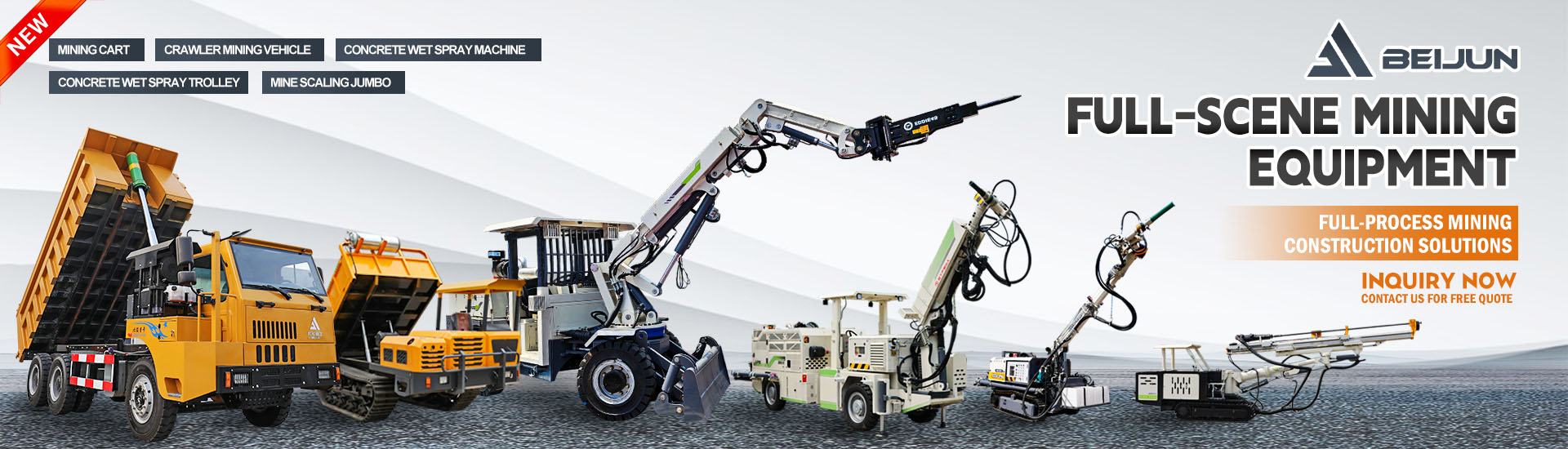
Global Mining Dump Truck Market Reaches $32.59 Billion In 2026. Wet Disc Brakes Capture 44.8% Market Share As Underground Mines Prioritize Steep-Grade Safety. Compact 3.5-Ton Underground Dump Trucks Support Narrow-Vein Haulage Upgrades. As global mining operations push deeper underground and into narrower ore bodies, haulage equipment buyers are shifting focus from sheer tonnage to maneuverability, braking reliability, and cost-per-ton efficiency. While surface mega-mines continue testing autonomous and ultra-class fleets, small-to-medium underground metal mines, coal mines, and tunneling contractors are increasingly adopting compact, low-profile dump trucks engineered for confined headings. This report examines current market growth, core braking and emission trends, major manufacturer developments, and how Beijun Group's compact haulage trends and 3.5-Ton Underground Dump Truck With Wet Brake System address narrow-tunnel haulage demands.
Market Overview – Steady Growth Driven By Cost-Per-Ton Productivity
According to Mordor Intelligence, the global mining dump truck market expanded from USD 30.91 billion in 2025 to USD 32.59 billion in 2026, and is projected to reach USD 42.43 billion by 2031 at a compound annual growth rate (CAGR) of 5.42%. Within the broader underground segment, Grand View Research valued the global underground mining equipment market at USD 45.2 billion in 2025, forecasting a 6.4% CAGR through 2033 as operators modernize aging fleets.
Safety-critical subsystems are growing in parallel. Future Market Insights estimates that the off-highway mining truck brake systems market will grow from USD 1.2 billion in 2026 to USD 2.1 billion by 2036 (5.4% CAGR), with integrated wet disc brakes accounting for a leading 44.8% share in 2026.
At the regional level, competitive dynamics are shifting rapidly. Analysts note that Chinese equipment manufacturers are gaining significant traction across Southeast Asian coal projects and African copper mines by offering 20% to 30% list-price advantages alongside flexible customization, pressuring legacy OEMs to compete on total lifecycle value.
Three Major Trends Reshaping Underground Haulage
1. Wet Brake Systems Become Standard For Steep-Grade Safety. Underground haulage routes routinely combine steep ramps, standing water, and abrasive rock dust—conditions that can accelerate wear and affect conventional dry drum brakes. Enclosed wet disc brakes use oil-immersed friction components to help protect the braking system and manage heat during loaded downhill hauls. Their adoption reflects the importance of braking reliability in demanding underground conditions.
2. Compact, Low-Profile Dimensions Unlock Narrow-Vein Deposits. As easily accessible deposits deplete, narrow-vein and low-profile mining has become a key driver of underground equipment innovation. Mine planners increasingly consider compact haulers with reduced vehicle height and tight turning radii to work within restricted headings and limit the need for costly drift enlargement.
3. Emission Controls And Electrification Accelerate Fleet Upgrades. Underground air-quality requirements are an important factor in fleet planning. In the United States, for example, MSHA regulations under 30 CFR 57.5060 establish exposure limits for diesel particulate matter. These requirements are encouraging mine operators to examine exhaust emissions and ventilation demands. Battery-electric mining trucks are also attracting attention as mines assess charging infrastructure, operating cycles and total ownership costs.
Key Manufacturer Developments
Leading global and regional manufacturers are actively tailoring their underground truck portfolios to match diverse drift sizes and power requirements:
Epiroc: Continues expanding its underground truck lineup across diesel and battery-electric drivetrains, including the 22-tonne Minetruck MT22.
Sandvik: Focuses on high-capacity hard-rock haulage and zero-emission underground fleets, including battery-electric models such as the 50-tonne TH550B.
Caterpillar: Supplies heavy-duty underground articulated trucks while also advancing battery-electric haulage development.
Beijun Group: Targets the compact underground haulage segment with customizable wet-brake and electric dump trucks for mining and tunneling applications.
Beijun Group's 3.5-Ton Wet Brake Underground Dump Truck Solution
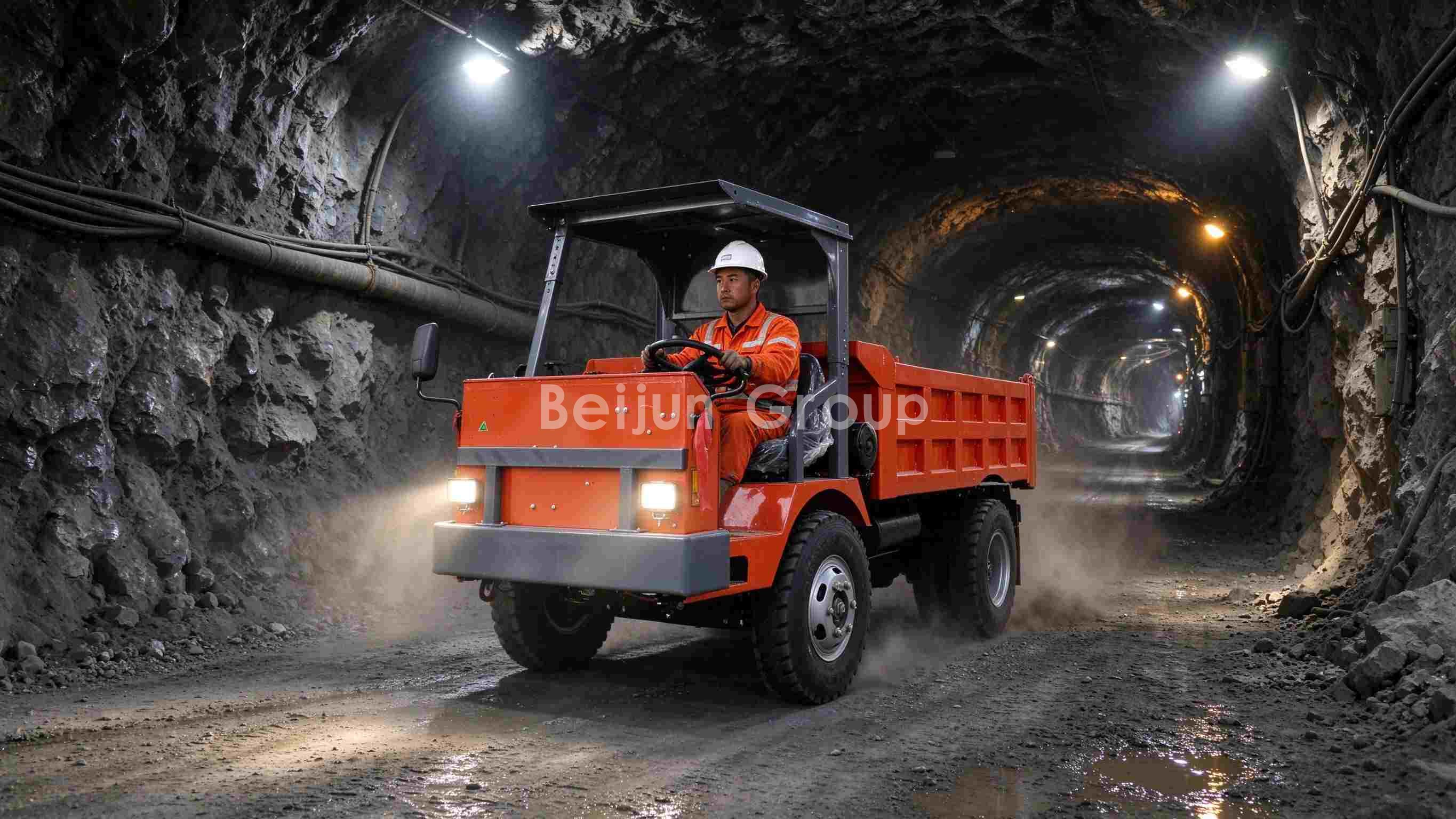
To meet the operational realities of narrow tunnels and small-to-medium underground mines, Beijun Group offers its 3.5-Ton Underground Dump Truck With Wet Brake System, alongside 5-ton and 7-ton variants in the same series.
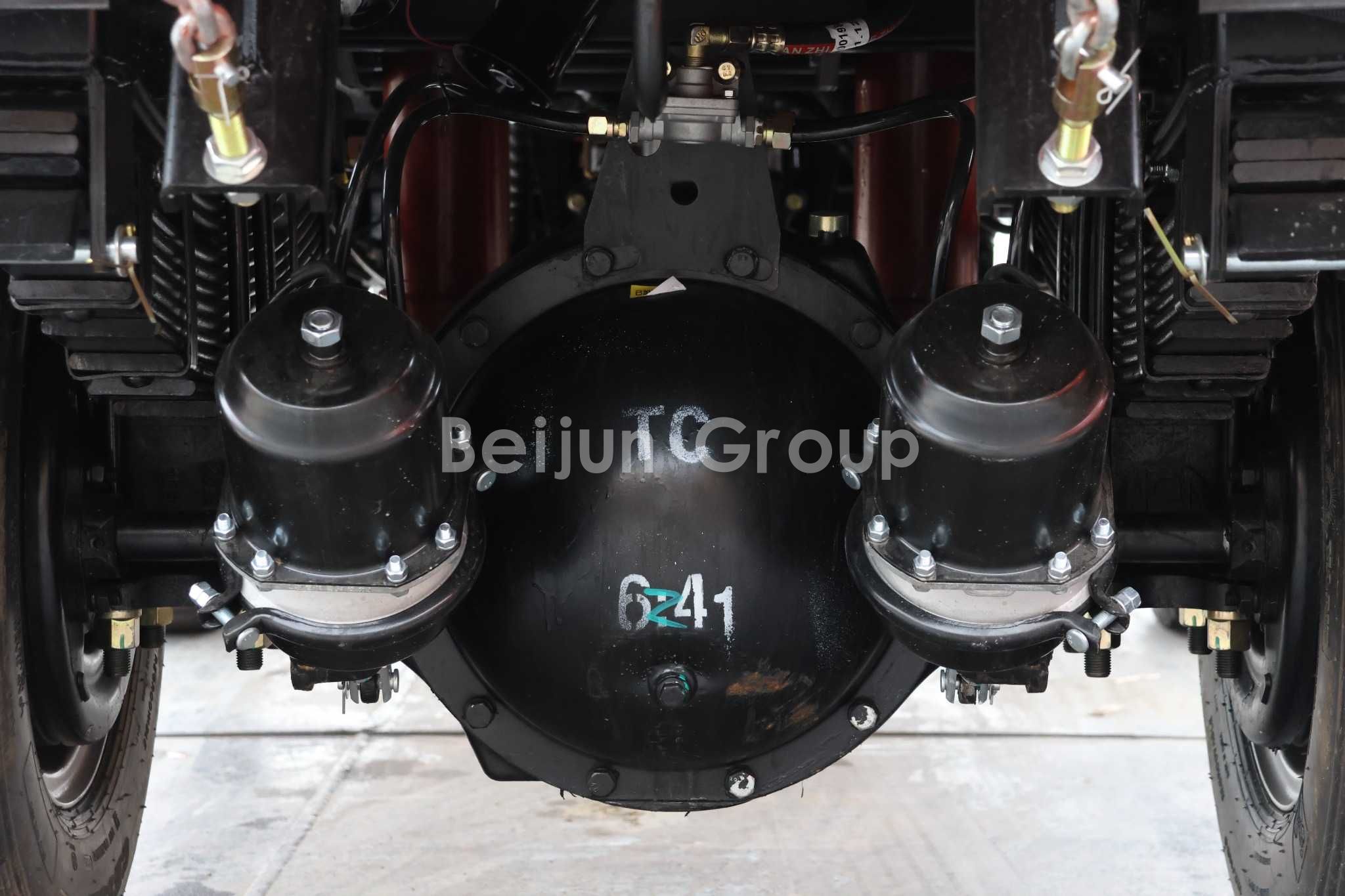
Built around a compact 4 × 1.5 × 1.3 m body profile (with a 1.8 m operator standing height), the 3.5-ton model is designed to navigate tight underground headings while maintaining a practical load capacity.
Wet Braking & Cooling Axle. The truck features a self-developed enclosed spring wet braking system paired with a forced circulation cooling wet axle. This configuration is designed to help manage braking heat and protect friction components from direct exposure to dust and water in underground environments.
Powertrain & Climbing Torque. Powered by a Changchai National III 4G33T (44.1 kW) engine matched with a Nanjing 130 high/low-speed gearbox and front/rear Isuzu axles, the drivetrain is configured for low-speed underground haulage and ramp operation.
Heavy-Duty Chassis & Hydraulics. The truck uses a 160 × 60 × 6 mm frame and a 2.4 × 1.5 × 0.45 m cargo box, with a 6 mm bottom plate and 4 mm side plates. Its hydraulic configuration includes a 110 × 900 mm lifting cylinder, dual-circuit hydraulic control and an anti-drop safety lock. The vehicle is also equipped with Chaoyang 700-16 mining steel wire tires.
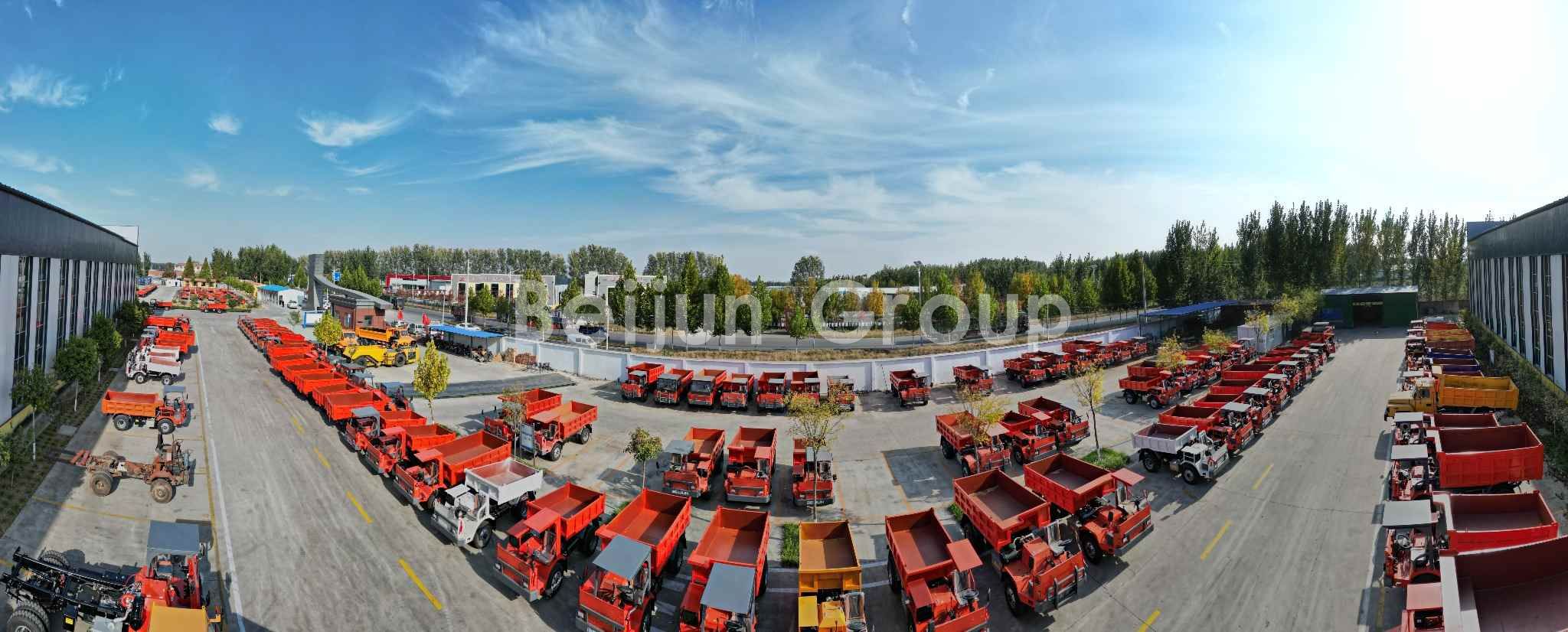
Underground Emission Control. The truck is equipped with hydraulic power steering and a water-washing exhaust treatment system. Exhaust treatment requirements should be assessed against the mine's ventilation arrangements and applicable local regulations.Headquartered in Jining, Shandong, Beijun Group operates three major production bases spanning over 150 acres with a 300 million RMB investment, backed by more than 20 patents and CE, ISO, SGS, and MSDS certifications. The company supports OEM customization based on specific tunnel dimensions, rock conditions, and haulage capacity, complemented by 24-hour online technical support.
Conclusion And Outlook
As underground mining moves toward tighter ore bodies and stricter safety benchmarks in 2026, compact dump trucks equipped with enclosed wet braking systems remain an important option for mines with restricted haulage routes. Industry observers note that mine operators evaluating new compact haulers should prioritize four criteria: wet-brake thermal performance on steep grades, overall vehicle height and width relative to drift clearances, exhaust filtration or electrification readiness, and reliable spare-parts support.
For projects seeking a factory-direct narrow-tunnel hauler, Beijun Group's 3.5-Ton Underground Dump Truck With Wet Brake System offers a compact configuration with wet braking technology and a heavy-duty chassis for underground haulage applications.
Contact Beijun Group
Email: beijun@beijun-group.com
Phone: +86 17854788133
Website: www.beijun-group.com
Address: Beijun Industrial Park, Jining, Shandong, China