French
  Arabic
  German
  Russian
  Dutch
Dutch  Portuguese
  Turkish
  Spanish
  Italian
Global Wet Shotcrete Machine Market Surges – Automated and Robotic Systems Drive $1.32 Billion Industry
Market to reach $1.96 billion by 2034. Robotic systems hold 68% market share. Wet mix dominates at 61.5% of total demand.
Here is what is happening in the wet shotcrete machine market right now.
Demand is up. Technology is changing fast. Mines and tunnels are moving toward automation. Wet shotcrete is the standard. Robotic systems are taking over.
The global shotcrete spray machines market was valued at $1.29 billion in 2024. It is expected to reach $1.96 billion by 2034. That is a CAGR of 4.4 percent.
In 2025, the automated wet shotcrete machines market alone was worth $1.32 billion. By 2032, it is projected to hit $2.14 billion at a CAGR of 7.2 percent.
Here is what you need to know.
Wet Mix Dominates the Market
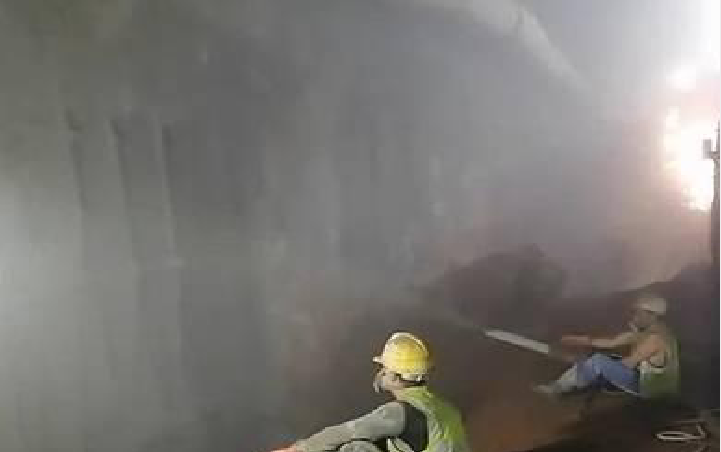
Wet mix shotcrete is the clear leader. In 2025, the wet mix segment generated $846.3 million. By 2034, it is expected to reach $1.31 billion.
Why is wet mix so popular? A few reasons.
Better bonding strength. Wet mix systems provide uniform consistency and enhanced compressive strength. That ranges between 4,000 to 7,000 psi.
Less waste. Rebound rates stay well below 10 percent. That means cleaner job sites and lower material costs.
Lower dust. Wet mix generates less dust than dry mix. That matters for worker safety and regulatory compliance.
In the broader shotcrete machines market, wet mix accounts for about 61.5 percent of total demand. Around 64 percent of contractors prefer wet mix systems for large-scale operations.
Over 61 percent of tunnel construction contractors are adopting wet mix shotcrete systems because of lower rebound waste and higher spraying efficiency.
Robotic Systems Are Taking Over
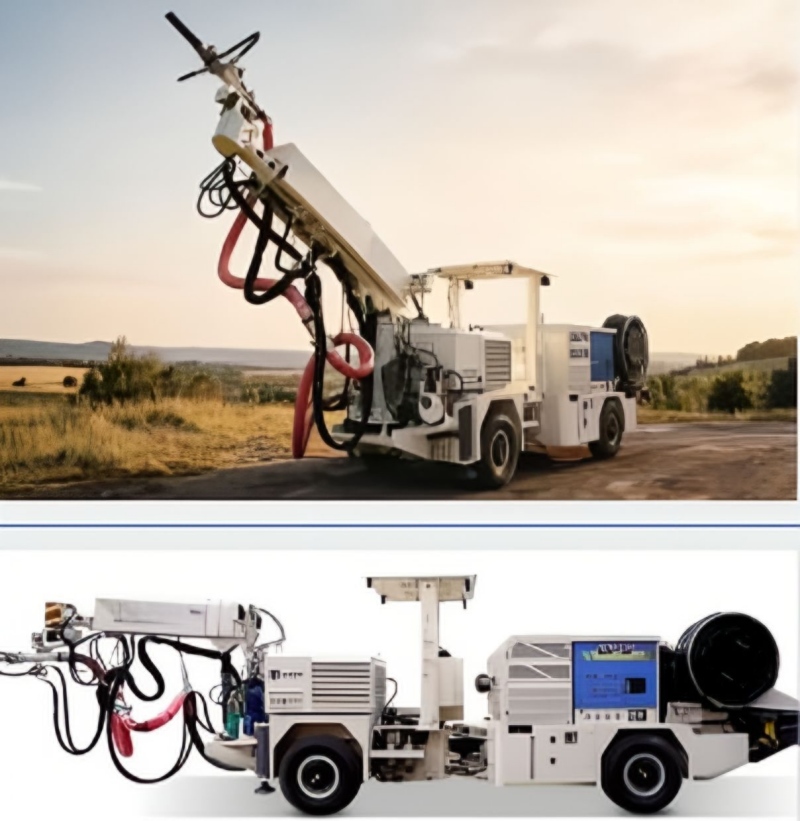
Robotic shotcrete sprayers are becoming the industry standard. In 2024, robotic spray machines held 68.4 percent of the market share. They are projected to grow at a CAGR of 4.7 percent through 2034.
Why are mines and contractors switching to robotic systems?
Precision. Many robotic systems offer positioning precision within ±5 mm. That ensures consistent quality across the entire tunnel face.
Speed. Robotic sprayers can deliver up to 20 cubic meters per hour. That can shorten project timelines by nearly a quarter.
Safety. Robotic systems reduce operator exposure to hazardous overhead zones. Operators can work remotely. That is a big deal in underground mining and tunneling.
Labor savings. Around 52 percent of tunnel contractors in the US are using automated shotcrete systems to reduce labor dependency.
Nearly 52 percent of contractors globally prefer robotic spraying systems. Around 49 percent of mining companies are integrating robotic shotcrete equipment to improve worker safety in confined spaces.
Approximately 46 percent of mining companies are increasing the use of robotic shotcrete machines to improve underground worker safety and reduce operational downtime.
Regional Trends – Asia-Pacific Leads, North America Grows
The shotcrete machines market varies by region.
Asia-Pacific holds the largest share at about 36 percent of the global market. Rapid urbanization and underground rail expansion are driving demand. China is the dominant player in the region.
Europe accounts for 28 percent of the global market, reaching $94.41 million in 2026. Tunnel renovation and railway modernization projects are the main drivers. Around 49 percent of infrastructure maintenance companies are using shotcrete systems for concrete restoration.
North America represents 24 percent of the global market, accounting for $80.92 million in 2026. The US market alone was valued at $259.9 million in 2024 and is forecast to grow at a CAGR of 4.4 percent through 2034[citation:8]. Aging infrastructure and a focus on repair and rehabilitation continue to drive demand.
The US market shows a clear preference for robotic wet-mix equipment in large-scale construction projects.
Key Players and Recent Developments
Major players in the shotcrete machines market include SANY (Putzmeister), Aliva, Normet, Epiroc, Zoomlion (CIFA), WUXIN, CRCHI, and others[citation:6][citation:10]. The top three companies hold about 50 percent of the automated shotcrete machine market.
Recent developments show the industry moving toward smart technology.
In June 2026, China Railway Construction Heavy Industry (CRCHI) successfully tested a concrete wet shotcrete machine with real-time scanning and spraying guidance technology on the Qian-Gui Railway Project. The system integrates intelligent scanning, real-time monitoring, and guidance functions. It helps operators accurately control spraying thickness based on color cloud map displays. This reduces concrete consumption and improves surface flatness.
Earlier in June 2026, China Railway Industry received a patent for a "grinding disc and rotor valve assembly, dry shotcrete machine, wet shotcrete machine". The design uses wear-resistant metal grinding discs and composite rotor liners to reduce bias wear and extend component life.
In July 2026, Shandong High-Speed received a utility model patent for a "wet shotcrete vehicle for spraying ultra-high performance concrete". The vehicle is designed for fast construction and rapid repair.
In late June 2026, Zhongjiao Xizhu delivered a customized SPT4016 intelligent wet shotcrete machine for the Huangbingwu Tunnel project in Zhejiang. The machine uses airflow to mix wet concrete and precisely metered accelerator to form high-strength support layers.
What Is Driving the Market
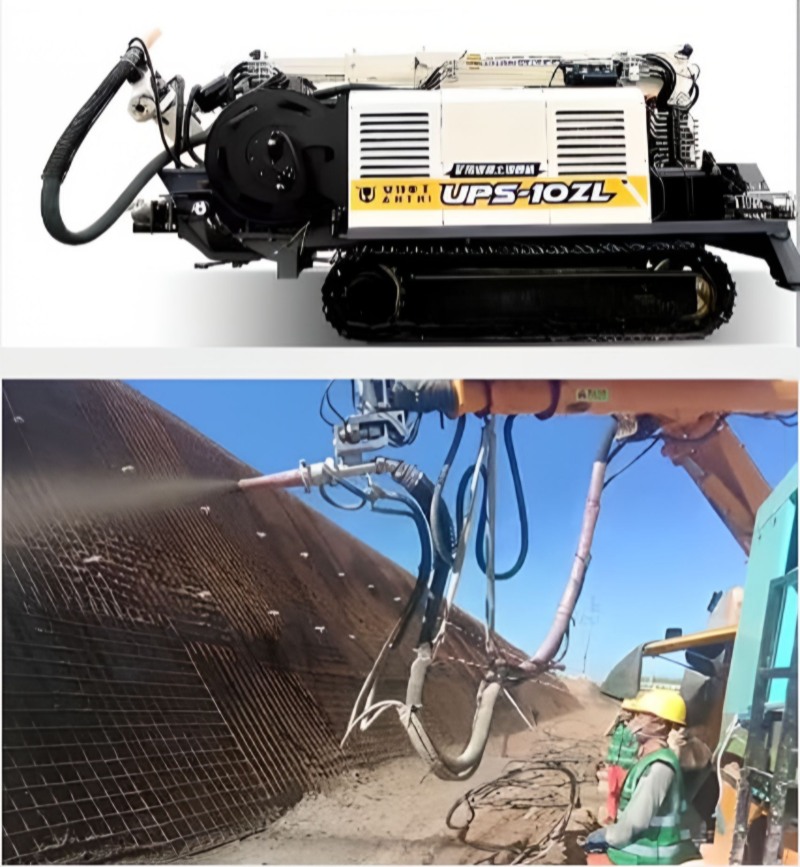
Several factors are pushing the wet shotcrete machine market forward.
Tunnel construction. Tunnel construction is the largest application for shotcrete machines, accounting for about 66 percent of demand. More than 54 percent of newly planned metro rail projects are using shotcrete technology for tunnel wall reinforcement.
Mining operations. Around 61 percent of underground mining operators are using shotcrete equipment for tunnel lining and rock surface reinforcement.
Urbanization. The UN projects that nearly two-thirds of the global population will live in urban settings by 2050. Governments are funding transit tunnels, underground utilities, and infrastructure corridors.
Safety regulations. Stricter safety rules in North America and Europe are driving adoption of automated systems. Labor shortages are also pushing contractors toward robotic equipment.
Environmental regulations. Demand for electric-powered shotcrete equipment has increased by nearly 33 percent due to sustainability targets.
Challenges Facing the Industry
It is not all smooth sailing. The industry faces real challenges.
Maintenance complexity. Nearly 42 percent of small and medium-sized contractors report difficulties managing regular maintenance schedules. Around 37 percent of construction firms experience operational delays because of equipment wear and tear in harsh underground environments.
Skilled operator shortages. Approximately 34 percent of companies face workforce shortages in skilled machine handling. Automated shotcrete systems require trained operators.
Nozzle blockages. More than 39 percent of contractors report productivity losses caused by nozzle blockages and inconsistent concrete flow.
Spare part availability. Approximately 28 percent of infrastructure companies struggle with spare part availability and delayed servicing.
What This Means for Buyers
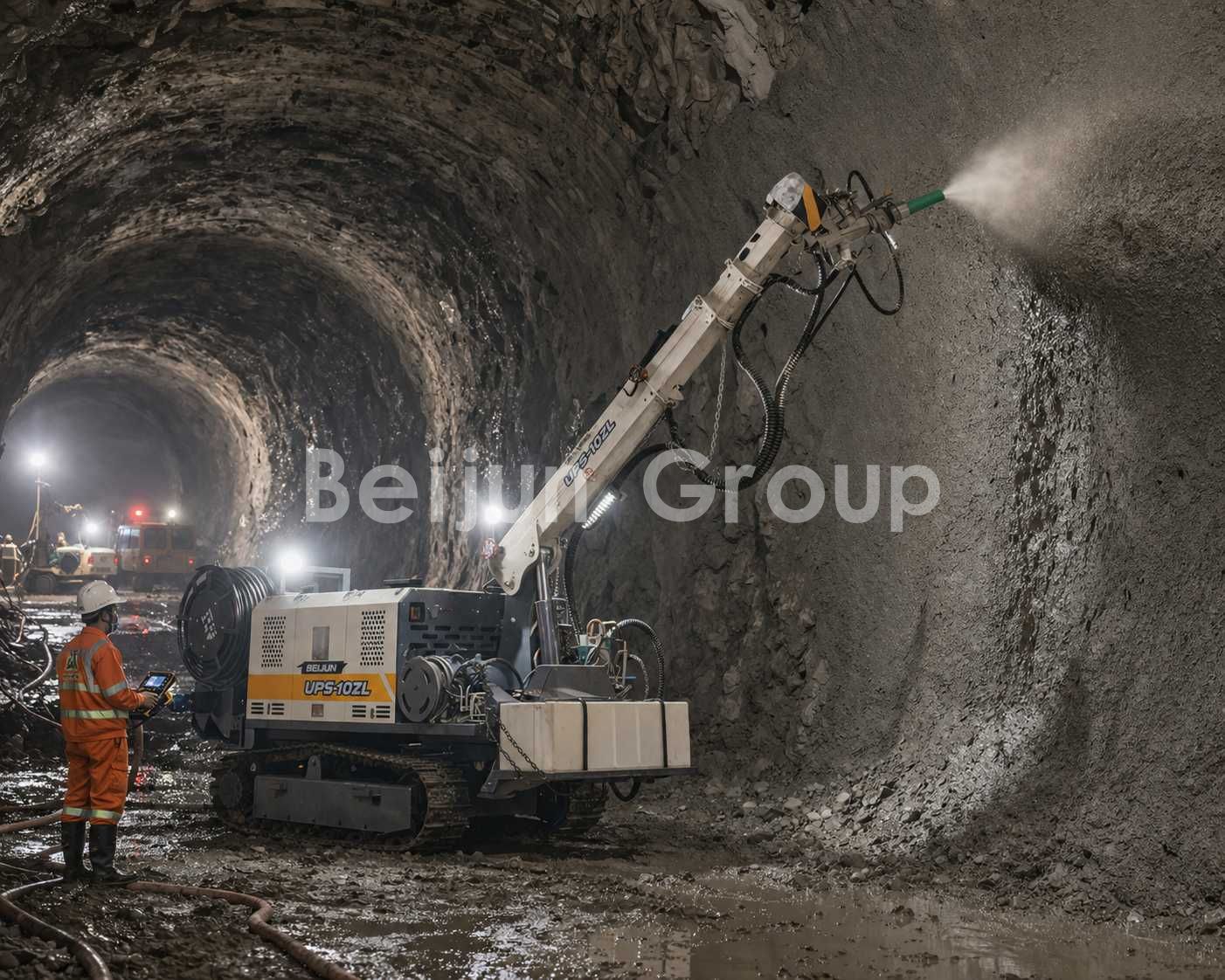
If you are in the market for a wet shotcrete machine, here is what I think matters.
Consider robotic systems. They are more precise, faster, and safer. The market is moving this way. The data shows it.
Go wet mix. Wet mix is the standard for large projects. Lower rebound. Less dust. Better quality.
Think about maintenance. Ask suppliers about wear part life. Rotor liners and delivery hoses wear out. Know the replacement schedule and costs.
Check support. Spare part availability matters. Ask about delivery times for your region.
Consider automation. Real-time scanning and guidance systems are becoming available. They reduce concrete waste and improve quality.
Beijun Group manufactures wet shotcrete machines and a full range of mining support equipment. Contact us to learn more about how we can support your operations.
Contact Beijun Group
Email: beijun@beijun-group.com
Phone: +86 17854788133
Website: www.beijun-group.com
Address: Beijun Industrial Park, Jining, Shandong, China
Mention this article when you contact Beijun. We will send you product specs and pricing within 24 hours.