French
  Arabic
  German
  Russian
  Dutch
Dutch  Portuguese
  Turkish
  Spanish
  Italian
Market to hit $55.6 billion by 2035. Lithium-ion and narrow chassis designs dominate APEX 2026. Urbanization and safety rules drive adoption.
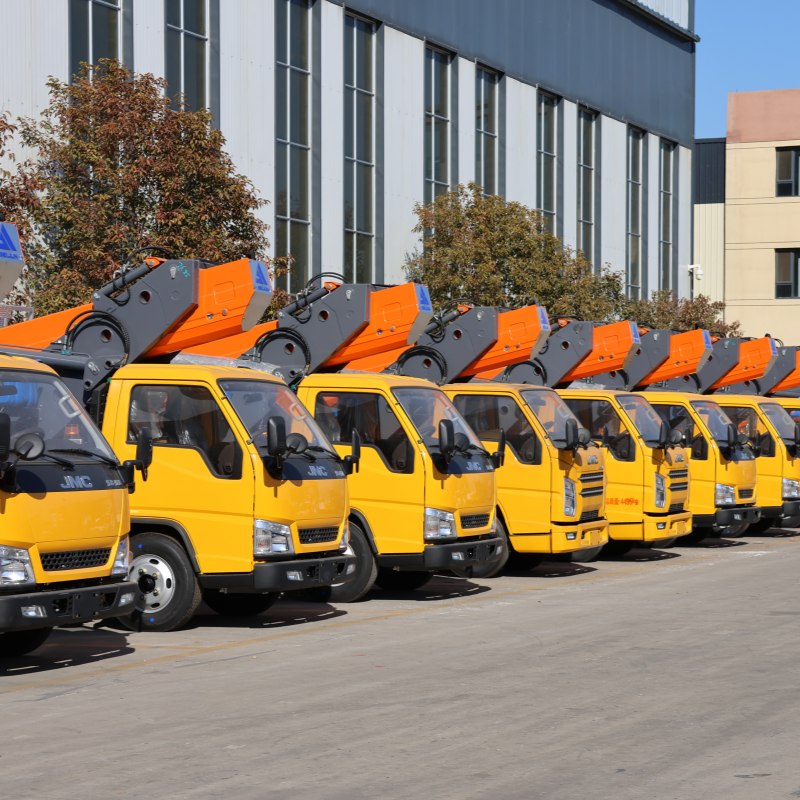
Here is what is happening in the aerial work platform market right now.
Demand is up. Technology is changing fast. Rental fleets are expanding. Electric and compact models are taking over.
The global truck mounted aerial platforms market was valued at $27.4 billion in 2025. By 2035, it is expected to hit $55.6 billion. That is a CAGR of 7.3 percent .
Another report puts the broader aerial work platform market at $21.5 billion in 2025, growing to $41.58 billion by 2034 at 7.6 percent [citation:10]. Either way, the market is moving up.
What is driving all this growth? A few key trends.
APEX 2026 – Electrification and Compact Design Take Center Stage
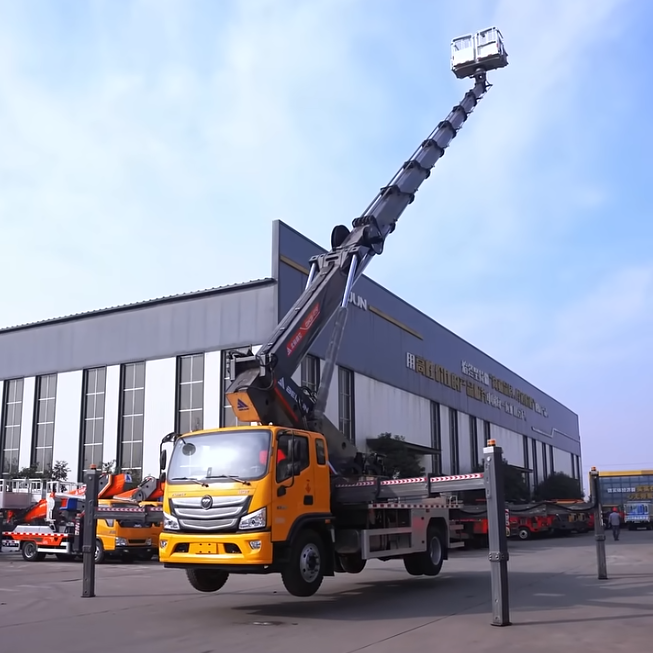
APEX 2026 in Maastricht, Netherlands, was a clear signal. The industry is accelerating toward electrification, compactness, and intelligence.
The show drew over 350 exhibitors and more than 10,000 professional attendees. Walking through the halls, one thing was obvious: internal combustion equipment has taken a back seat. Electric drive solutions are now the dominant choice.
Lithium-ion is gaining momentum. In the indoor articulated boom segment, manufacturers showcased ultra-narrow models developed for confined warehouse and building spaces. On the electric scissor lift side, lithium iron phosphate (LFP) solutions got a lot of attention .
The signal was unmistakable: lithium-ion electrification represents the clear direction for premium scenarios such as indoor dust-free construction. Leading rental fleets are prioritizing these models when updating their equipment portfolios.
Compact and lightweight designs are the new currency. The strongest product signal from the show was that compact manlifts with a chassis width of 1.2 to 1.6 meters and overall weight under 3 metric tons are becoming the core focus for fleet renewal among Western European rental companies.
The reasoning is practical: European urban areas have high building density and extremely limited indoor working space. Narrow-body models can cover a range of high-margin scenarios, including warehousing, retail facilities, and historical building restoration.
Application-specific customization is the new standard. Rental companies are no longer satisfied with "general-purpose" machines. They are demanding deeply optimized, customized solutions tailored to specific job site scenarios. The one-size-fits-all model is outdated.

Market Growth – Big Numbers, Big Demand
Multiple reports confirm the strong growth trajectory of the aerial work platform market.
Global Market Insights reports that the bucket trucks market was valued at $27.4 billion in 2025 and will grow to $55.6 billion by 2035 at 7.3 percent .
Straits Research puts the broader aerial work platform market at $21.5 billion in 2025, growing to $41.58 billion by 2034 at 7.6 percent .
Aerial work platform trucks are expected to reach $293.8 billion by 2032 at a CAGR of 7.57 percent.
The construction sector is the largest end-user, but utility, telecommunications, and municipal services are also major drivers. In 2025, the construction segment held the largest share .
Non-insulated bucket trucks dominated the market in 2025, accounting for about 57.7 percent of the market. They are widely used in construction, municipal services, telecommunications, and general maintenance. They cost less than insulated trucks and are easier to maintain .
Class 7 trucks were the largest segment in 2025, accounting for about 26.1 percent. They offer the best balance of payload, mobility, and operational efficiency. They are widely used in utilities, telecommunications, and municipal services .
Regional Trends – North America Leads, Asia-Pacific Grows Fastest
North America is the largest market for bucket trucks, driven by utility infrastructure modernization, the Infrastructure Investment and Jobs Act, and strict workplace safety standards .
Asia-Pacific is the fastest-growing region. Rapid urbanization, power grid upgrades, telecom network expansion, and public infrastructure investment are driving demand. China and India are key markets.
Straits Research expects Asia-Pacific to hold the largest revenue share with a CAGR of 9.4 percent during the forecast period. China is dominating the Asia-Pacific market .
What Is Driving the Shift to Electric Aerial Platforms
Several factors are pushing the industry toward electrification.
Environmental regulations. Updated EU environmental regulations are accelerating the elimination of internal combustion engines for indoor machines. Electric drive has become the baseline requirement .
Lower operating costs. Electric models have lower maintenance requirements. They have fewer moving parts. They do not need oil changes. Charging costs are lower than fuel costs.
Quiet operation. Electric models are much quieter than diesel machines. That matters for nighttime retail maintenance, hospital operations, and residential areas .
Indoor applications. Zero emissions are essential for indoor dust-free construction. Electric models meet that requirement .
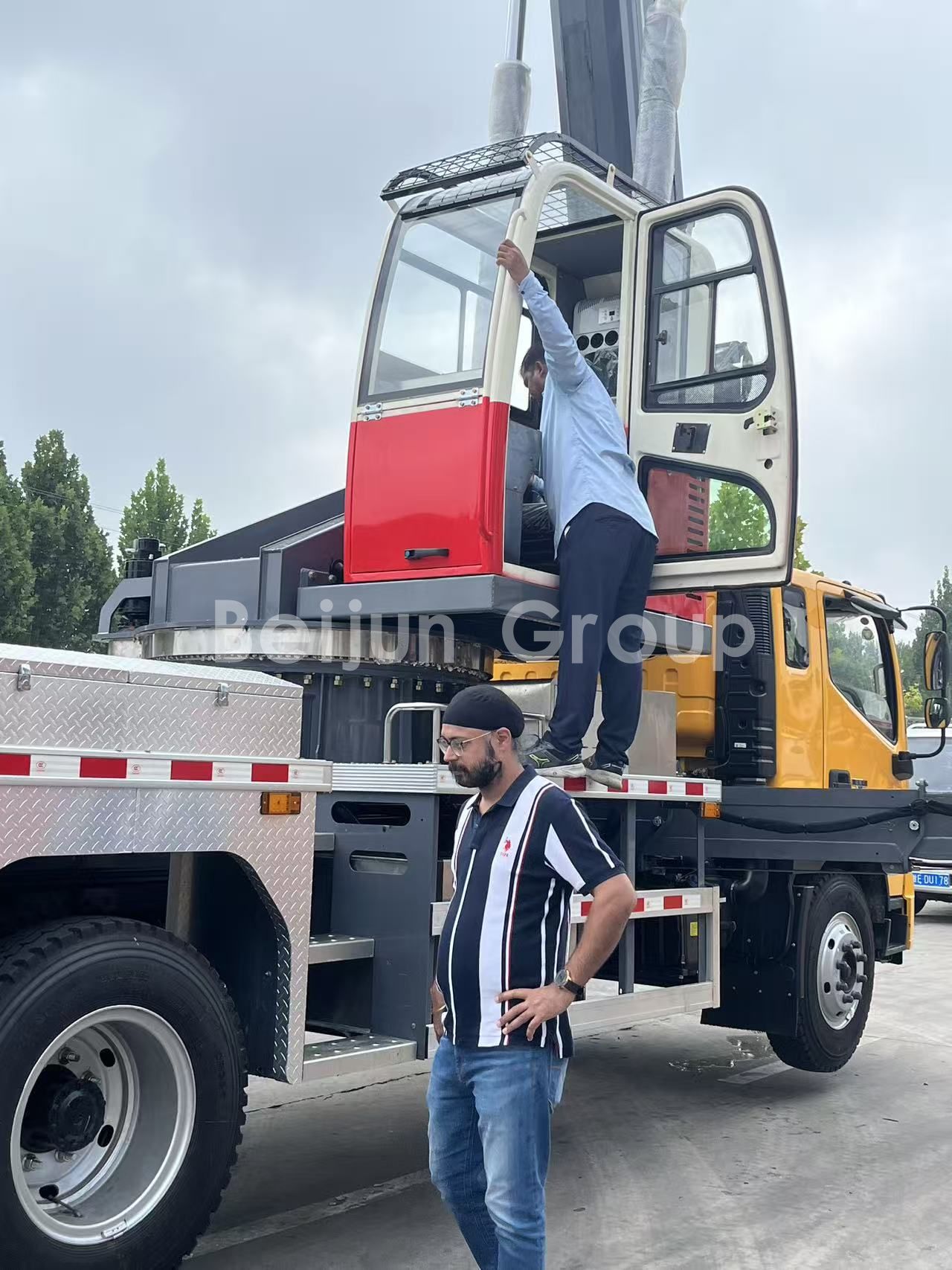
One example: new electric aerial platform models from Chinese manufacturers are entering the market. XCMG recently filed for a new pure electric aerial platform with a 105 kW peak motor, powered by CATL LFP batteries. The blue-plate design is suited for urban work .
Another example: Zoomlion's ZT82J straight-boom aerial platform received an Outstanding Flagship Product Award. With a maximum working height of 82.3 meters, it is the world's tallest model in its category. The engineering team faced the challenge of balancing overall dimensions and total weight while ensuring structural rigidity. After over ten rounds of simulation, they developed a proprietary multi-edge boom cross-section to optimize the structure .
The Rental Market – A Major Growth Driver
Rental is becoming the preferred model for many users. Instead of purchasing expensive aerial platforms, contractors and small businesses are opting for short-term rentals .
This approach provides access to advanced and well-maintained equipment without long-term financial commitments. Rental providers also offer maintenance services, reducing operational burdens .
As of mid-2025, one major rental company operated and managed 202,600 aerial work platforms. Of those, 59,270 were entrusted by other equipment owners through an asset management service model.
Rental companies are driving demand for new technology. They are adding advanced models to their fleets to maintain competitiveness.
What This Means for Buyers
If you are in the market for an aerial work platform, here is what I think matters.
Think electric. Regulations are pushing the shift. Electric models are quieter, cleaner, and cheaper to run. Consider lithium-ion if you can afford the premium.
Consider compact models. Narrow chassis designs are becoming the standard for urban work. They fit in tight spaces and access standard doorways.
Look at customization. One-size-fits-all is outdated. Ask suppliers about application-specific configurations .
Consider rental. Renting gives you access to a wide range of models without the upfront cost. It also includes maintenance.
Check compliance. Make sure your equipment meets local safety standards. ANSI/SAIA A92 and OSHA requirements are common.
Contact Beijun Group
Email: beijun@beijun-group.com
Phone: +86 17854788133
Website: www.beijun-group.com
Address: Beijun Industrial Park, Jining, Shandong, China
Mention this article when you contact Beijun. We will send you product specs and pricing within 24 hours.