French
 Arabic
 German
 Russian
 Dutch
 Portuguese
 Turkish
 Spanish
 Italian
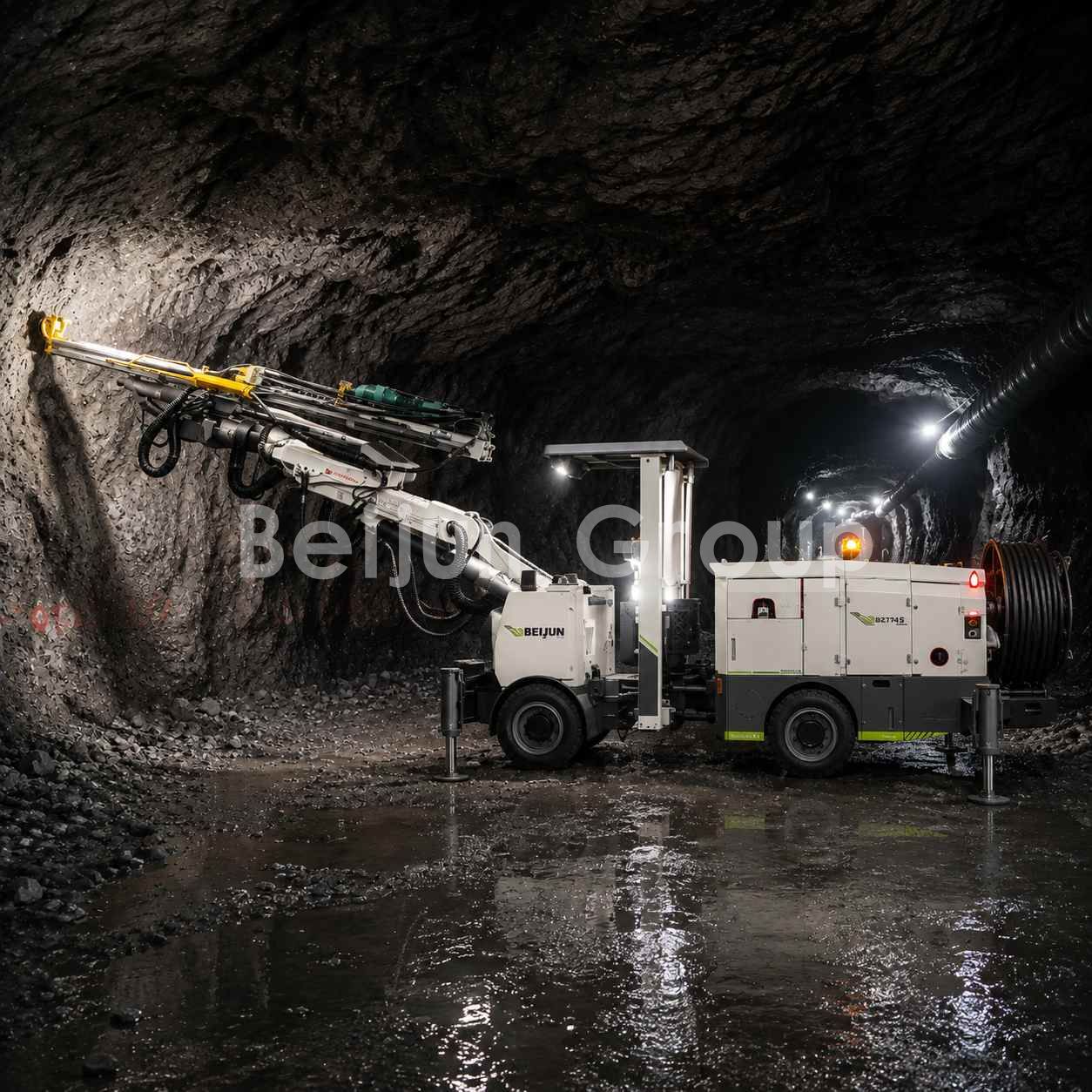
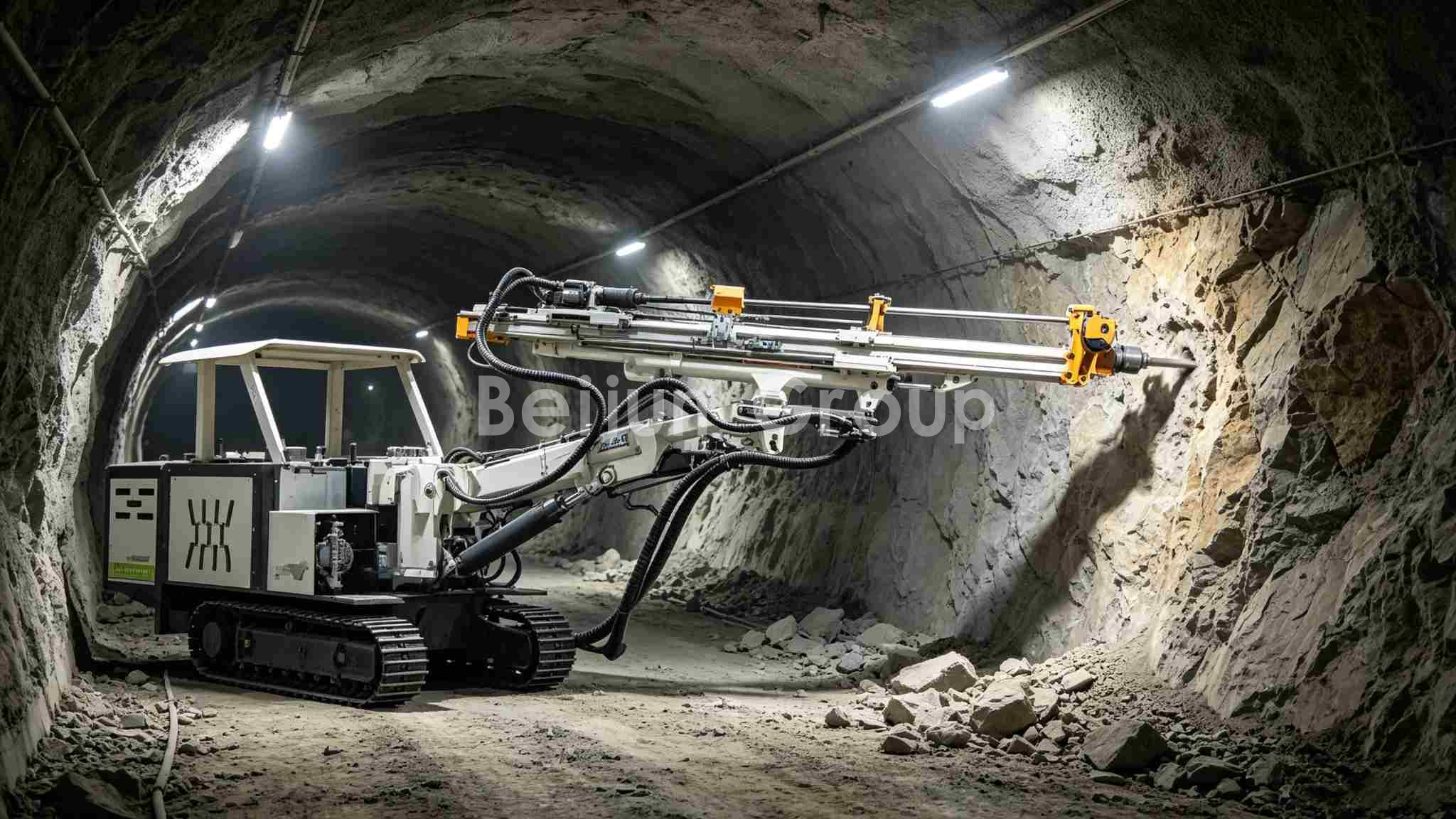
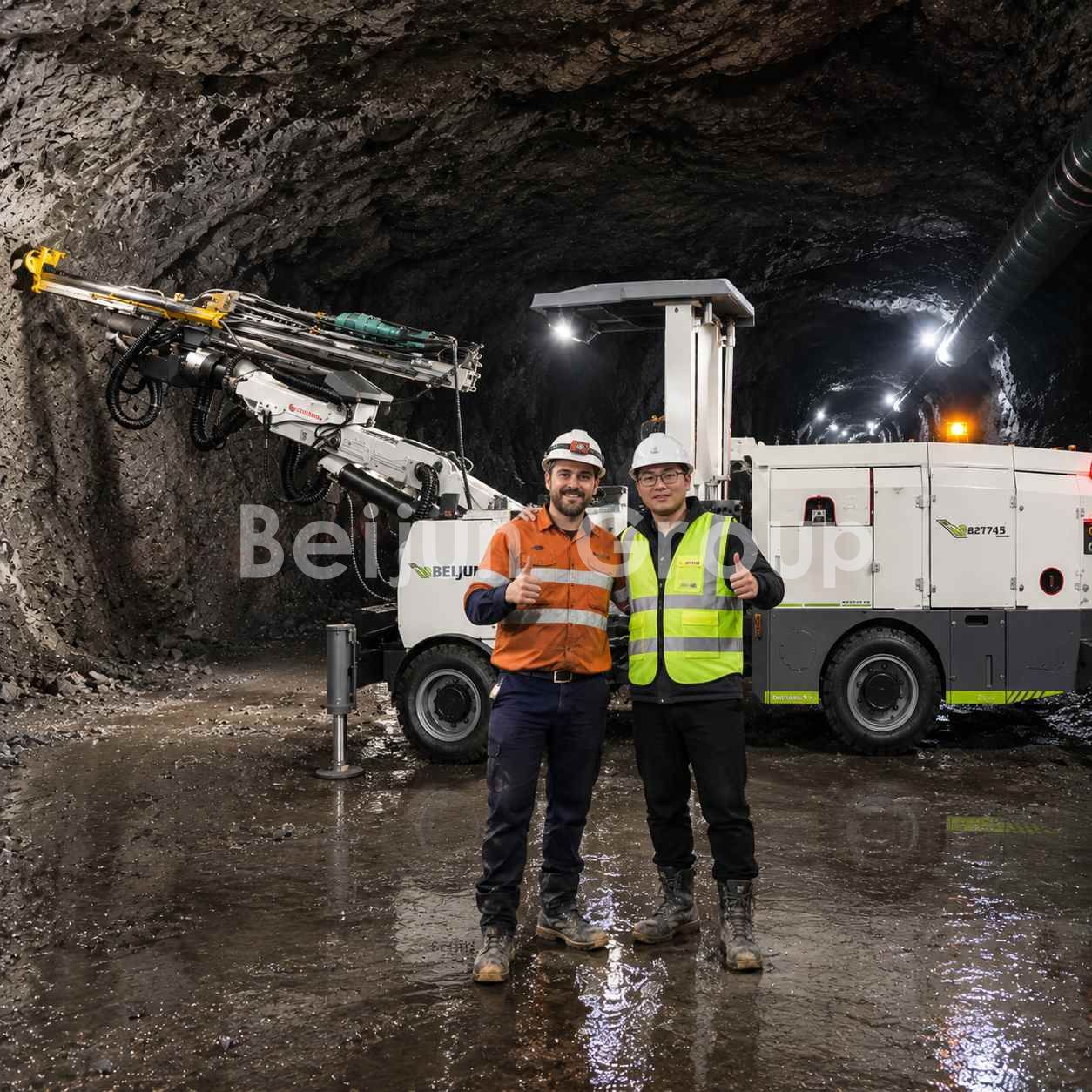
Underground development depends on accurate drilling, reliable equipment positioning and a machine configuration suited to the dimensions of the working tunnel. Beijun's CYTJ45 wheeled rock drilling jumbo combines a single-boom drilling arrangement, an HC95 rock drill, an electrical drilling system and a diesel-powered travel chassis for underground mining and tunneling applications.
In underground mining and tunnel construction, drilling is one of the operations that determines the progress of subsequent blasting and excavation work. The equipment must reach the required drilling positions, maintain stable support during operation and work within the available tunnel cross-section. Delays caused by difficult repositioning or unsuitable equipment dimensions can affect the wider development schedule.
For projects requiring mechanized drilling in underground headings, a wheeled drilling jumbo offers a combination of mobility and a dedicated drilling platform. Beijun's CYTJ45 is configured for tunnel sections ranging from 2.8 × 2.8 m to 6 × 6 m, according to the supplied product catalogue.
Designed for Different Underground Tunnel Sections
Underground roadways vary in width, height and layout depending on the mining method, geological conditions and development requirements. Drilling equipment must therefore be selected according to the actual working cross-section rather than nominal machine size alone.
The CYTJ45 catalogue lists an applicable tunnel cross-section of 2.8 × 2.8 m to 6 × 6 m. Its overall transport dimensions are approximately 10,790 × 1,500 × 1,725–2,575 mm, with a listed machine weight of approximately 12,000 kg.
The machine has a minimum ground clearance of 263 mm and a maximum travel speed of 12 km/h. Its listed maximum gradeability is 15°. The minimum inner and outer turning radii are 2,500 mm and 6,715 mm respectively.
These dimensions and mobility figures are important when planning equipment access, turning space and movement between drilling locations. Before selecting a rock drilling jumbo, project teams should compare its transport dimensions and turning requirements with the actual underground roadway layout.
Single-Boom Drilling Configuration with HC95 Rock Drill
The drilling boom is the working component that positions the rock drill at the required locations on the tunnel face. Its movement and positioning range influence how the operator approaches different drilling points during a drilling cycle.
According to the CYTJ45 catalogue, the machine is equipped with an HC95 rock drill. The listed drilling diameter ranges from 33 mm to 76 mm, with R32, R38 and T38 shank types available in the stated configuration.
The rock drill has a maximum impact power of 18 kW and an impact frequency of 60 Hz. The drilling system uses an impact-and-rotation working principle, combining impact energy with drill rotation during operation.
For underground development work, the choice of drill rod and bit should be matched to the rock conditions, required hole diameter and drilling plan. Actual drilling performance also depends on rock hardness, jointing, bit condition and operating settings.
Electrical Drilling System and Power Configuration
Power supply is an important consideration for underground drilling equipment. The machine's electrical system must provide the required power for drilling and related equipment while remaining compatible with the site's available electrical infrastructure.
The CYTJ45 catalogue lists a total installed electrical power of 65.5 kW, including a 55 kW main motor. The stated working voltage is 1,140 V, with a frequency of 50 Hz. The starting method is listed as star-delta starting. The configuration also includes a 200 kVA transformer and an 80 m cable drum capacity.
These electrical specifications should be checked against the mine's power distribution system before equipment installation. Cable routing, voltage compatibility, transformer capacity and electrical protection arrangements all need to be considered during site preparation.
Diesel-Powered Chassis and Underground Mobility
Drilling equipment must move between working locations as development advances. The travel chassis therefore plays an important role in equipment relocation, positioning and access through underground roadways.
The CYTJ45 specification lists a Yunnei diesel engine rated at 65 kW, with maximum torque of 420 N·m. Its travel system uses hydrostatic transmission. The catalogue also lists a maximum approach angle of 17.6° and a departure angle of 15.2°. These values provide reference points when assessing the machine's ability to negotiate changes in roadway gradient and access conditions.
For mine operators, the practical suitability of the travel system depends on road surface, gradient, turning space and the distance between drilling locations. These factors should be reviewed together when planning underground equipment movement.
Air Compressor and Water Pump Systems
Rock drilling requires supporting systems in addition to the drill itself. Compressed air and water supply are important parts of the overall drilling arrangement, helping support the operation of the drilling equipment and its associated processes.
The CYTJ45 is equipped with an air compressor from Xiamen East Asia. The catalogue lists a motor power of 7.5 kW, maximum airflow of 0.77 m³/min and maximum working pressure of 8 bar. Lubricating oil consumption is listed at no more than 3.6 g/m³.
The water pump system uses a pump from Nanfang Pump Industry, with a motor power of 3 kW. Its listed maximum flow rate is 80 L/min, and maximum working pressure is 12 bar. Air and water supply requirements should be considered when preparing the working area. Operators should check supply connections, operating pressure and maintenance access to ensure that the supporting systems can be serviced under site conditions.
Hydraulic System and Machine Stabilization
Hydraulic systems support the movement and positioning of drilling equipment. During drilling, the machine also needs a stable working position to reduce unwanted movement and maintain the intended drilling alignment.
The CYTJ45 catalogue lists a maximum hydraulic system pressure of 230 bar, a hydraulic oil tank capacity of 180 L and a filtration precision of 10 μm. The chassis configuration includes two expandable front hydraulic outriggers and two rear hydraulic outriggers. The parking brake pressure is listed at 4 MPa, while the emergency brake pressure is listed at 8–10 MPa.
Before drilling begins, the machine should be positioned and stabilized according to the operating procedure. Hydraulic hoses, cylinders, connections and filtration components should be inspected regularly as part of routine equipment maintenance.
What to Consider When Selecting a Wheeled Drilling Jumbo
Choosing a rock drilling jumbo requires more than comparing drilling diameters or motor power. The machine must align with the tunnel geometry, drilling plan, power supply, and the actual working conditions of the project. Project teams need to ensure the equipment's transport dimensions and working cross-section fit perfectly with the actual roadway and the drilling face.
Naturally, operators also have to factor in the specific drilling requirements. The required hole diameter, drill rod type, and the geological rock conditions will dictate how the wheeled drilling jumbo performs on site. It is equally crucial to map out the electrical infrastructure ahead of time, checking the available voltage, transformer capacity, cable routing, and site electrical protection requirements.
Beyond the rig itself, review the compressed air, water supply, and hydraulic system requirements before the drilling jumbo is delivered to the heading. Finally, don't overlook the physical realities of the mine. Turning space, roadway gradients, travel distance, and easy access for routine maintenance will directly impact daily productivity. Providing the manufacturer with detailed tunnel dimensions, geological information, and site power conditions ensures the selected rock drilling jumbo configuration is perfectly suited for the project.
Beijun Group's Underground Drilling Equipment
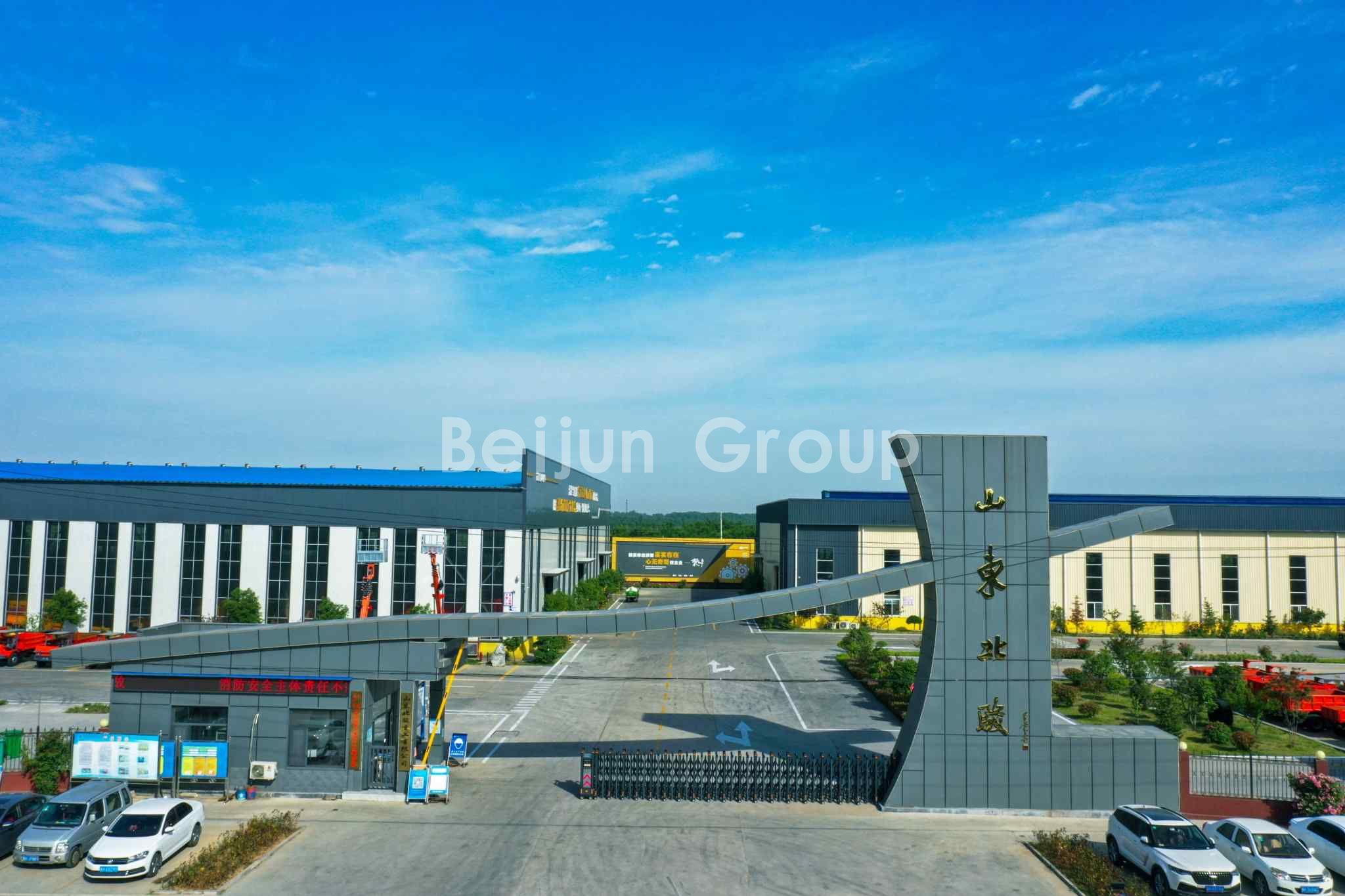
Based in Jining, Shandong Province, China, Beijun Group manufactures equipment for underground mining and construction applications. Its product range includes underground mining trucks, rock drilling jumbos, scaling equipment, bolting rigs and shotcrete sprayers.
The company integrates equipment design, research and development, production and sales. It also provides OEM and customized equipment solutions according to project requirements, including tunnel dimensions, rock conditions and construction needs.
The CYTJ45 wheeled rock drilling jumbo is part of Beijun's underground drilling equipment range. Customers can discuss tunnel cross-section, drilling diameter, electrical supply and project conditions with the Beijun team when evaluating the appropriate equipment configuration.
For more product information, visit the Beijun Wheeled Rock Drilling Jumbo product page or explore the wider range of Beijun underground mining equipment.
Conclusion
Underground drilling performance depends on the coordination of the rock drill, boom, power supply, hydraulic system and travel chassis. A suitable drilling jumbo must be matched to the tunnel dimensions, drilling requirements and supporting infrastructure of the project.
Beijun's CYTJ45 wheeled rock drilling jumbo combines an HC95 rock drill, a 55 kW main motor, a Yunnei diesel travel engine, air and water supply systems and hydraulic outriggers. These specifications provide a starting point for contractors assessing equipment for underground mining and tunneling operations.
Contact Beijun Group
For technical specifications, configuration details or a quotation for the CYTJ45 wheeled rock drilling jumbo, contact Beijun Group.
Email: beijun@beijun-group.com
Phone: +86 17854788133
Website: www.beijun-group.com
Address: Liulou Town, Wenshang County, Jining City, Shandong Province, China