French
 Arabic
 German
 Russian
 Dutch
 Portuguese
 Turkish
 Spanish
 Italian

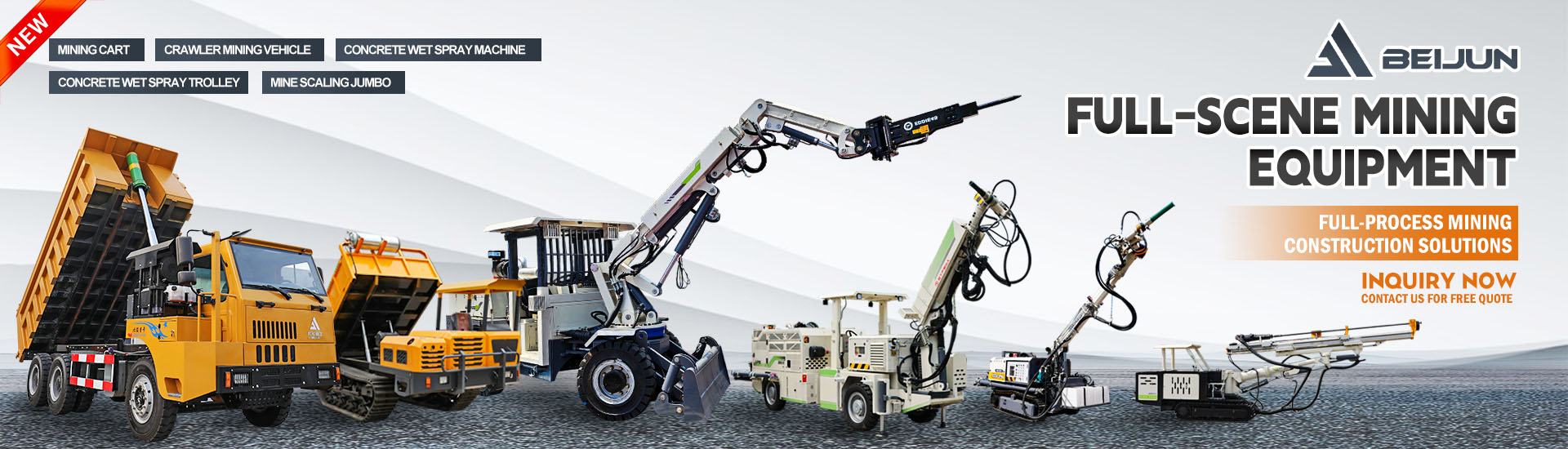
High-capacity mining transport places considerable demands on a truck's powertrain, chassis and braking system. Beijun Group's 35-ton wheeled mining dump truck combines a 305 kW Yuchai diesel engine, a Fast 10-speed transmission, reinforced Hande axles and an air braking system. The configuration is designed around the requirements of heavy-duty material handling and repeated mining transport cycles.
In mining operations, haulage efficiency is closely connected to the way equipment performs throughout the entire transport cycle. A truck must move loaded material, negotiate changing road conditions and return to the loading area repeatedly. As production volumes increase, operators often look beyond payload capacity and pay closer attention to engine output, axle strength, tire specifications and braking arrangements.
For projects requiring higher-capacity material transport, Beijun Group presents its 35-ton wheeled mining dump truck. The model brings together a reinforced chassis, a large cargo box and a diesel powertrain intended for demanding working conditions.
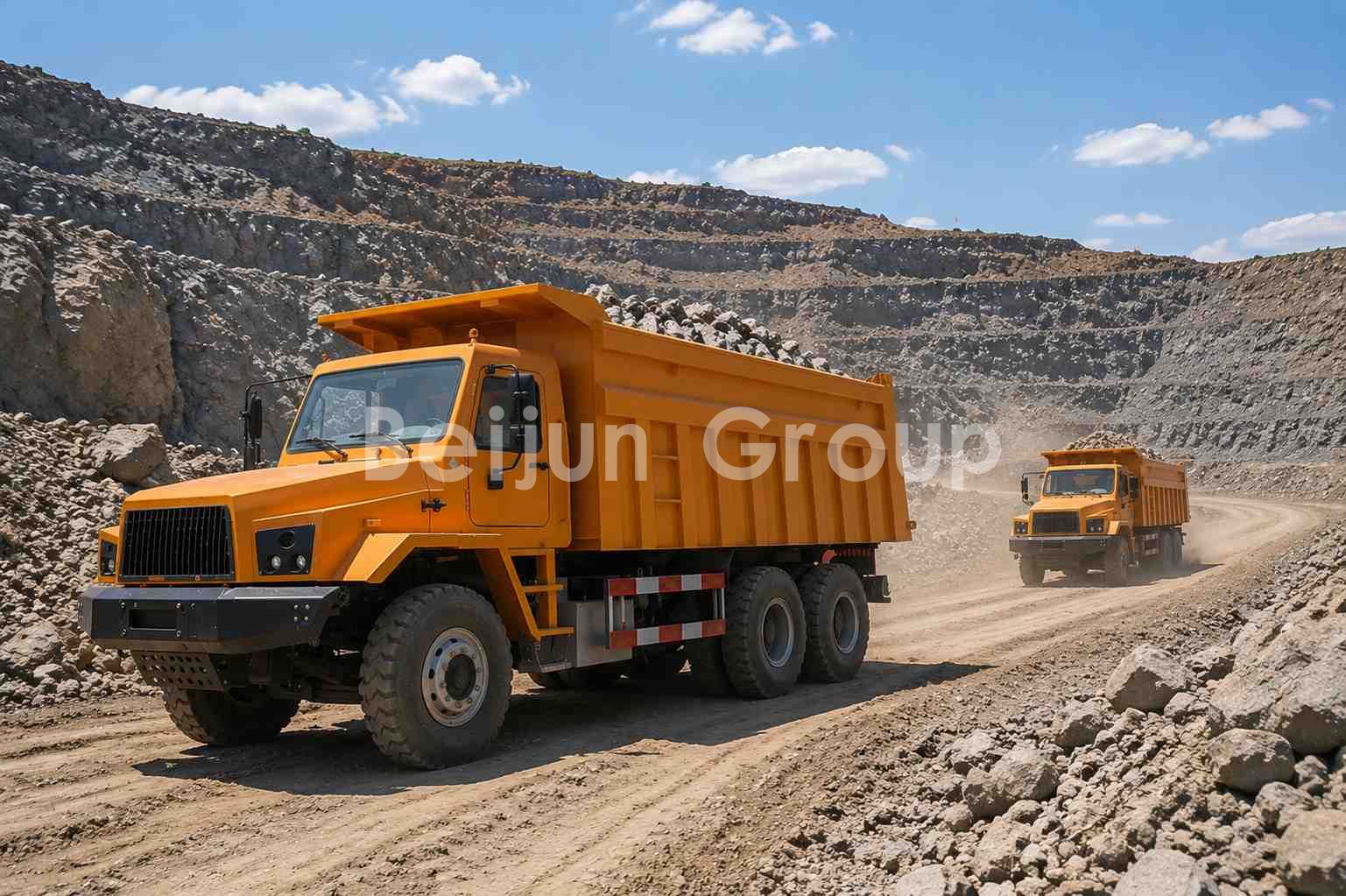
35-Ton Payload for High-Volume Mining Operations
Payload capacity is one of the main factors influencing the efficiency of a mining haulage fleet. A higher-capacity truck can move more material per trip, potentially reducing the number of transport cycles required to deliver a given quantity of ore or waste rock.
Beijun's 35-ton model features a right-angle cargo box measuring 5,400 × 2,500 × 1,200 mm. The front-mounted cylinder lifting arrangement supports the unloading process, allowing the cargo body to be raised for material discharge.
The overall vehicle dimensions are 8,664 × 2,500 × 2,819 mm. These measurements are important when assessing whether the truck can operate within the available transport routes and loading areas. Before introducing a vehicle of this size, mine operators should check roadway width, overhead clearance, turning space and dumping conditions.
Yuchai YC6MK375-T300 Engine and Fast 10-Speed Transmission
Engine output and transmission selection influence how a loaded mining truck responds to different driving conditions. Starting under load, travelling on gradients and maintaining a suitable operating speed all place demands on the powertrain.
The Beijun 35-ton truck is equipped with a Yuchai YC6MK375-T300 National III diesel engine, with a rated power of 305 kW at 2,100 rpm. The engine is matched with a Shaanxi Fast 10JS220 10-speed transmission. Multiple gear ratios give the driver different options for starting, climbing and travelling under varying load conditions.
For mining contractors, the suitability of a powertrain should be assessed against the actual operating route. Loaded vehicle weight, road gradient, travel distance and surface conditions all influence the demands placed on the engine and gearbox.
6×4 Drive Configuration with Reinforced Hande Axles
Axles are responsible for supporting vehicle loads and transferring driving forces to the wheels. In heavy-duty mining applications, axle capacity and construction need to be considered alongside payload and road conditions.
This Beijun model uses a 6×4 dual rear axle drive configuration and reinforced Hande mining axles rated at 16T + 16T, according to the supplied technical specification. The reinforced axle arrangement forms part of the truck's heavy-duty configuration.
Cold-Riveted Frame and Heavy-Duty Suspension
Repeated loading, braking and travel over uneven ground can place significant stress on a mining truck's frame. The chassis must support the cargo while handling forces generated during normal vehicle movement.
Beijun specifies a 300 × 80 mm cold-riveted frame with an 8+8+8 mm construction. The suspension configuration includes front leaf springs measuring 90 × 16 mm with 11 pieces and rear leaf springs measuring 90 × 28 mm with 12 pieces. Regular inspections of the frame, suspension and connecting components remain important, especially when trucks operate frequently on uneven mining roads.
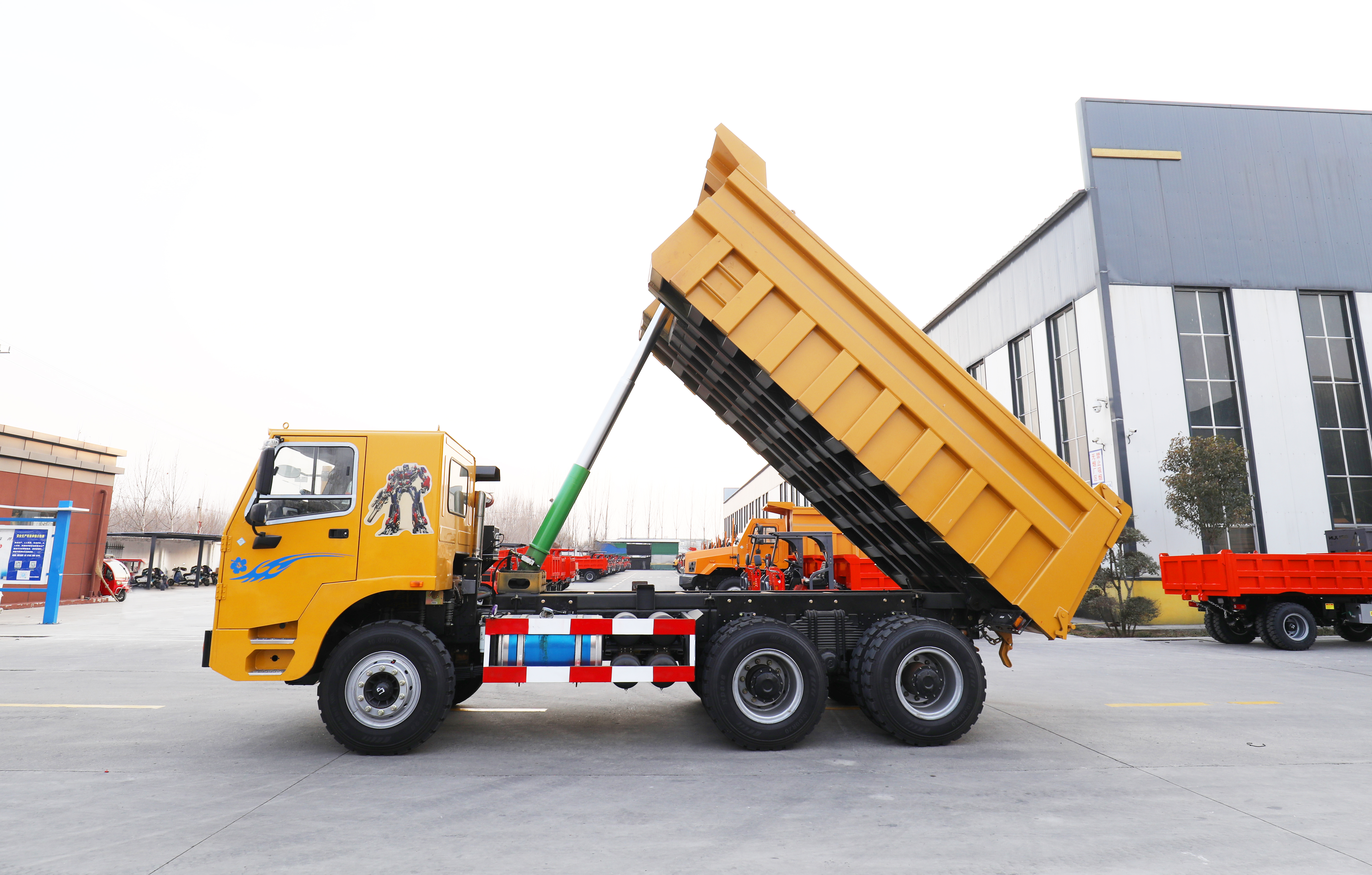
1200R20 Mining Steel Wire Tires
Tire selection affects how a heavy mining truck supports its load and moves across different road surfaces. The Beijun 35-ton model is equipped with Kunlun 1200R20 mining steel wire tires. Tire pressure checks, tread inspections and monitoring for abnormal wear can help operators identify potential problems during routine maintenance.
Air Braking System and Auxiliary Exhaust Brake
Braking is a central consideration in the operation of high-capacity mining trucks. A loaded vehicle requires reliable speed control and stopping capability, particularly when travelling on gradients or operating in areas with frequent changes in traffic conditions.
According to the supplied technical specification, the Beijun 35-ton model uses an air braking system. Its listed braking functions include service braking, parking braking and emergency braking. The truck also features an engine exhaust braking system, which can assist with vehicle speed control during downhill travel when operated in accordance with the manufacturer's instructions.
Air braking and oil-cooled wet braking are different technical configurations. Buyers should confirm the braking arrangement of the selected vehicle and review the relevant operating and maintenance documentation before placing an order.
Three-Stage Air Filtration and Exhaust Purification
Dust is a common operating challenge in mining environments. Airborne particles can enter the engine intake system if filtration is not properly maintained, increasing the importance of suitable air cleaning equipment.
The Beijun 35-ton truck is equipped with a three-stage desert-type air filtration system. The technical specification also lists a three-way catalytic filtration box for exhaust purification. Air filters and exhaust treatment components require regular inspection. Maintenance intervals should follow the manufacturer's recommendations and reflect actual site conditions. Emissions compliance should be confirmed against the regulations applicable in the destination market.
Enclosed Cab and Operator Equipment
Operator working conditions are another consideration in mining vehicle selection. The Beijun 35-ton model features an enclosed cab with heating and cooling air conditioning. Its listed equipment includes an LCD instrument panel, a radio with USB audio interface and a built-in 24V cab dome light.
The lighting system includes six headlights with high- and low-beam switching. Position lights, turn signals, reverse lights and brake lights are also included. The vehicle is equipped with dual windshield wipers with high- and low-speed settings, as well as a HOWO shock absorber arrangement for the cab.
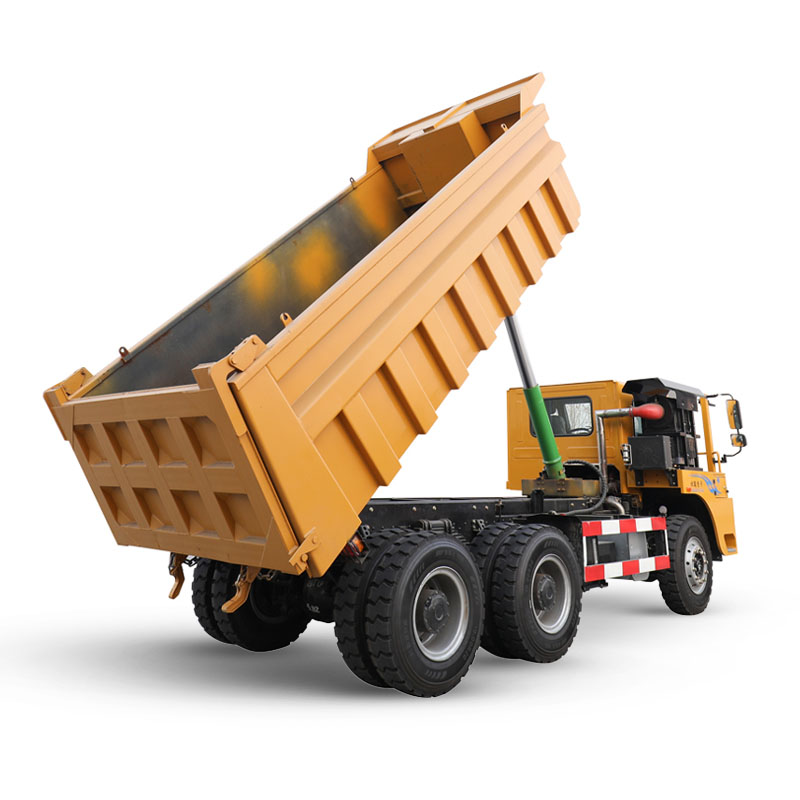
What to Consider Before Selecting a 35-Ton Mining Truck
A truck's rated payload is only one part of the equipment selection process. Its configuration must match the working environment and the wider transport system. Before selecting a 35-ton mining dump truck, project teams should review the following factors:
1. Roadway dimensions: Check the vehicle's 8,664 mm length, 2,500 mm width and 2,819 mm height against the actual route, including intersections, turning areas and loading points.
2. Material characteristics: Consider material density, moisture content and loading practices when planning payload distribution.
3. Powertrain requirements: Evaluate engine output, transmission ratios, axle configuration and route gradients in relation to the expected transport cycle.
4. Braking configuration: Confirm the air brake system, auxiliary exhaust brake and relevant maintenance requirements for the intended application.
5. Maintenance and parts support: Include engine servicing, air filter replacement, tire inspections, brake maintenance and spare-parts planning in the overall operating assessment.
Sharing route dimensions, material information and expected operating hours with the manufacturer can help establish whether the selected truck configuration is appropriate for the project.
Beijun Group's Mining Equipment Manufacturing
Based in Jining, Shandong Province, China, Beijun Group manufactures equipment for underground mining and construction applications. Its product range includes underground mining trucks, drilling jumbos, scaling equipment, bolting rigs and shotcrete sprayers.
The company integrates equipment design, research and development, manufacturing and sales. It also provides OEM and customized solutions according to project requirements, including tunnel dimensions, rock conditions and haulage capacity.
The 35-ton wheeled mining dump truck is part of Beijun's mining haulage equipment range. Customers can discuss vehicle configuration and project requirements with the Beijun team before confirming the appropriate model.
For more information, visit the Beijun 35-Ton Mining Dump Truck product page or explore the complete range of underground mining trucks.
Conclusion
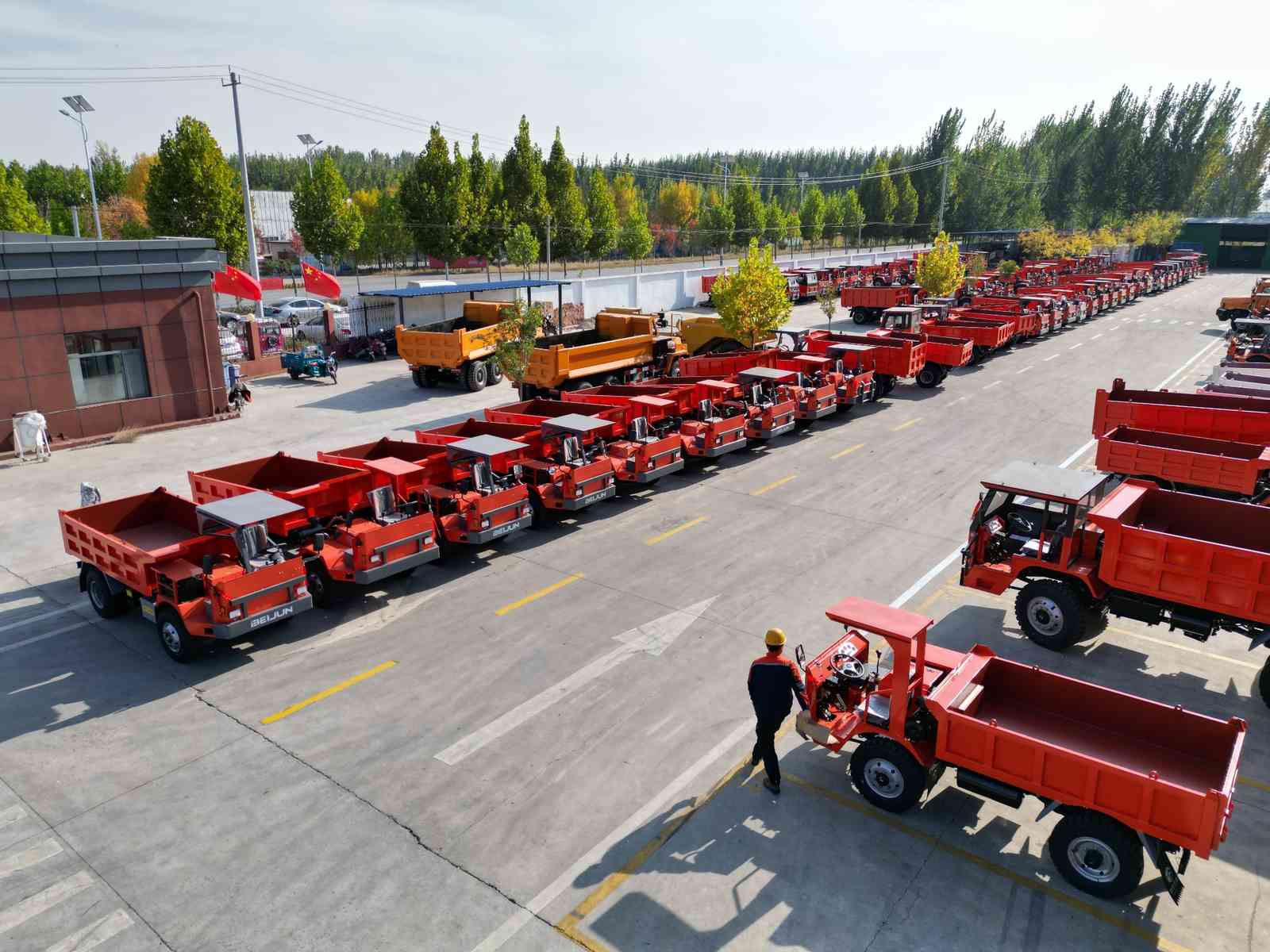
Heavy-duty mining haulage requires a balanced combination of payload capacity, engine output, transmission performance, axle strength and braking capability. Selecting a suitable truck means evaluating these specifications against the actual transport route and working conditions.
Beijun's 35-ton wheeled mining dump truck combines a 305 kW Yuchai engine, Fast 10-speed transmission, reinforced Hande axles, a cold-riveted frame, mining steel wire tires and an air braking system. These specifications provide a basis for mining contractors to assess the vehicle for high-capacity material transport applications.
Contact Beijun Group
For technical specifications, configuration details or a quotation for the 35-ton wheeled mining dump truck, contact Beijun Group.
Email: beijun@beijun-group.com
Phone: +86 17854788133
Website: www.beijun-group.com
Address: Liulou Town, Wenshang County, Jining City, Shandong Province, China